

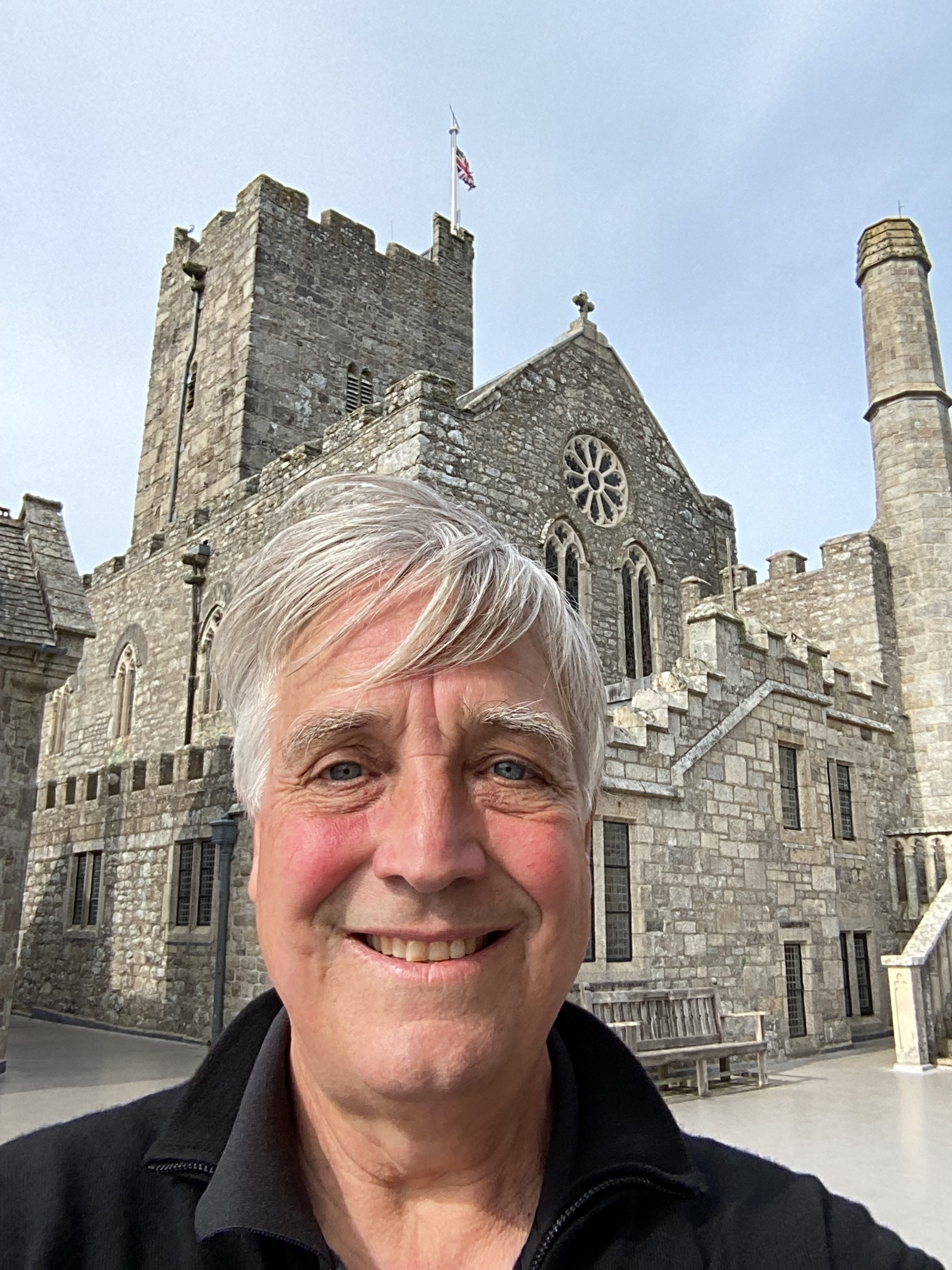
I made it. My St. Michael’s pilgrimage concluded yesterday more powerfully than planned. And for that, I thank God, Jesus, Mary, and St. Michael, and all my friends and family who urged me on and prayed for me.
It’s not so much as I did it, as we did it. A heightened sense of gratitude was one of the many gifts God granted me from this experience.
I’m not saying it went as I had originally expected. Adjustments were made right up until my final train ride to Gatwick Airport in London. But in all, my three-hundred-mile-plus journey ended at Saint Michael’s Mount in Cornwall on St. Michael’s Feast Day, September 29th, just as I had hoped.
It wasn’t easy. High winds (as evidenced the Union Jack at attention on top of the church) and heavy surf delayed access to the island for hours. The water taxis were grounded. And wouldn’t you know it, I had already scheduled my train departure.
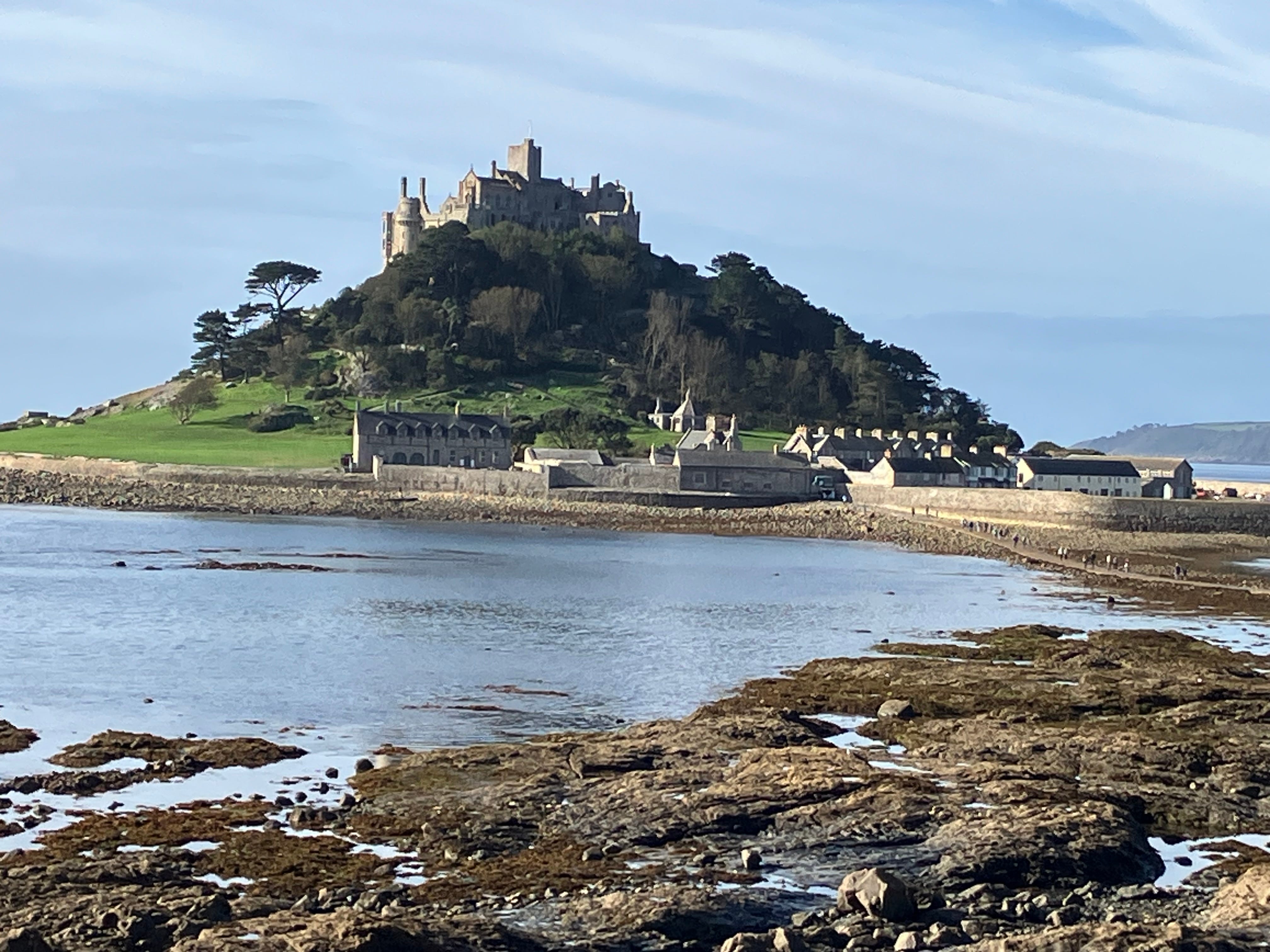
Here’s a photo of St. Michael’s Mount I took days earlier when the weather was fine, the tide low, and the seas calm. Note the walkers on the causeway. We didn’t get across the causeway until noon, and my train left Penzance at 2:00 that afternoon.
But once across, and racing up the steep climb to the fortress church at the summit, I was A-OK. Why? Well, for one thing I wasn’t huffing and puffing. Five weeks of hiking and traveling with a fifty-pound backpack had whipped me into decent shape. It also helped that I was able to offload my backpack with the entry gate staffers. So, with my exploration time cut down to about thirty minutes, I had my hiking boots laced up, my iPad at the ready, and I was up that hill like a mountain goat.
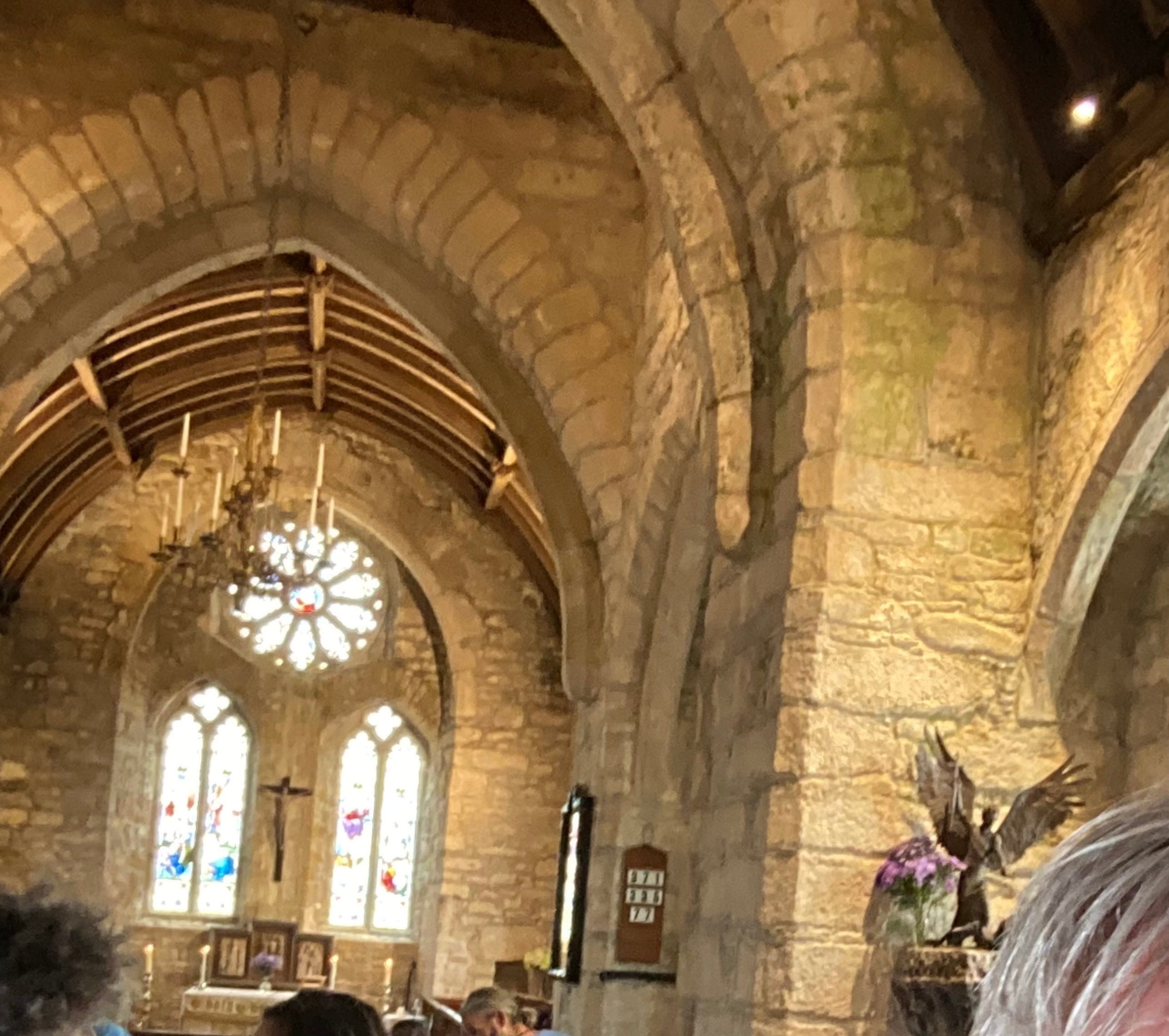
Here’s a photo from inside the chapel. Unfortunately I was so rushed, I took a bad shot and had to crop myself and others out. That was just minutes before the reverend appeared for a special St. Michael’s Feast Day service. The altar is in the background along with a beautiful carving of St. Michael spearing a dragon.
That chapel sits on holy ground watched over by St. Michael for 2,000 plus years. Local Cornish history has recorded that St. Michael himself saved their fishermen ancestors who were threatened by a sudden storm near the mount. In gratitude, the town built and dedicated a church to St. Michael on top of the mount in 495.
That’s 495 as in a way, way long time ago, just about when the Romans were over and done in England.
All that history and holiness, left me deeply gratified to be there in that church on St.Michael’s Feast Day, especially after visiting so many other English churches, holy sites, and statues dedicated to him.
Interestingly, as I checked through our now SI/AI managed internet on the history of St. Michael’s Mount, I found something not alarming but serious. Most internet reporting on St. Michael’s Mount shies away from confirming the start date for the first church as 495. But that’s the date in the official timeline of materials in St. Michael’s Mount Castle, which is managed by England’s National Trust, a government entity. And that’s the origin date on the wall in the centuries-old church on the mainland. Two firsthand sources, same date. A date is a date. A fact is a fact. There’s no need to hide it.
So, why SI/AI managed internet, wouldn’t you be exact? Is it because you won’t recognize a historical account of humans interacting with an angel? Or is there another reason for your inability to recognize St. Michael’s presence in English history?
Hmm. Yet another corner of that weedy internet garden that needs constant tending. And actually, that’s part of the reason for my pilgrimage and my reporting on it. Because we have to get our history witnessed and recorded before some Super Intelligence moves in and changes what we know is the truth, especially when it’s God’s truth.
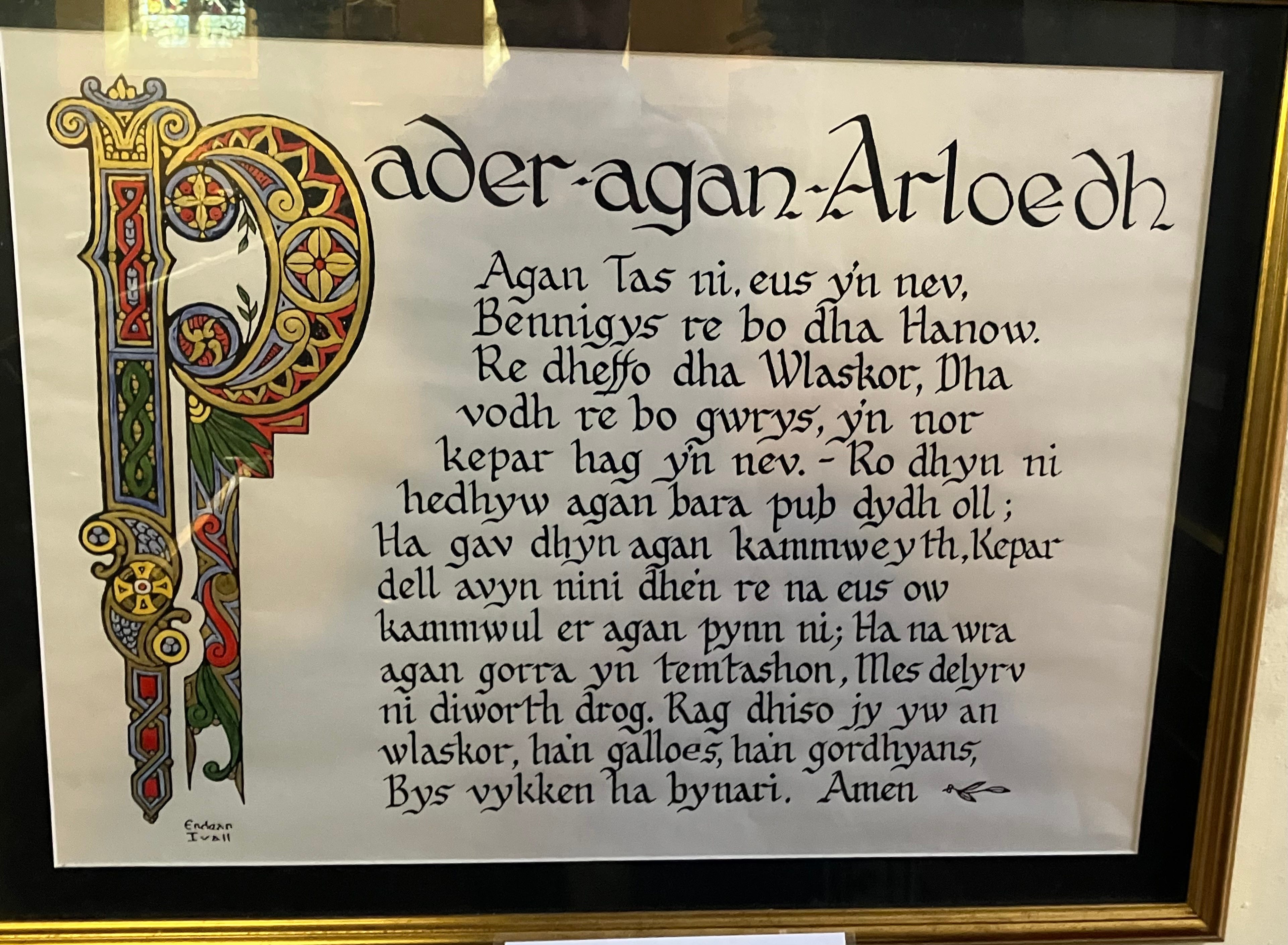
Was I there when St. Michael appeared to those ancient fishermen? No. Do I believe he did? Yes. Why? Because I have faith in St. Michael’s existence. Why is that? Because I just walked a big, whopping trail of ancient churches and ruined monasteries and chapels built in his name by people who shared my faith in St. Michael for over 2,000 years. And the more I walked, the more I learned how many of those Christians died for that faith. Like these Cornish Catholics martyred just ten years after King Henry’s Dissolution of Monasteries in 1539. I found out about them during a visit to All Saints Church in Marazion, the little town that guards the causeway to St. Michael’s Mount.
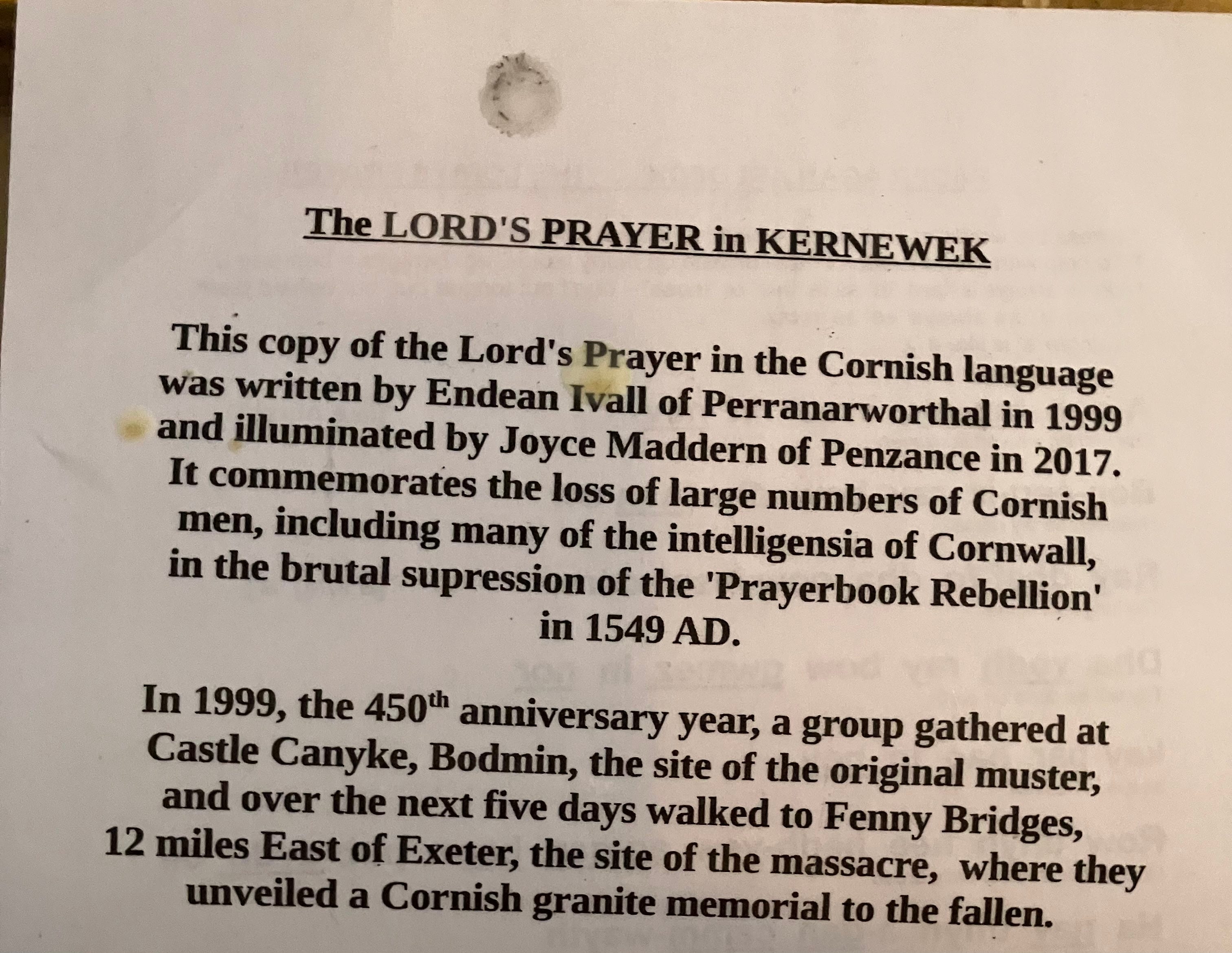
I traveled through both Bodmin and Exeter. I have no doubt some of those Cornishmen were patrons of churches I visited.
St. Michael was real to them, just as he’s real to me. I didn’t see him during my pilgrimage, but I saw what he did for me, and I felt it. St. Michael is in that land, and when you go where he is and believe in him, you will understand why I say that.
And that’s the weakness—and danger—of SI/AI, it can’t compute faith. It can only describe feelings, but it can’t feel them. And that’s why it’s important to put your boots on your feet and your feet on the street and go to church, or better yet, go on a pilgrimage. Your faith will be stronger, your life will have meaning, and your inner strength will far exceed what the internet can control.
There is an endless flood of evil coming at us through our media. St. Michael is our defender, and God is and has always been the answer, not SI/AI.
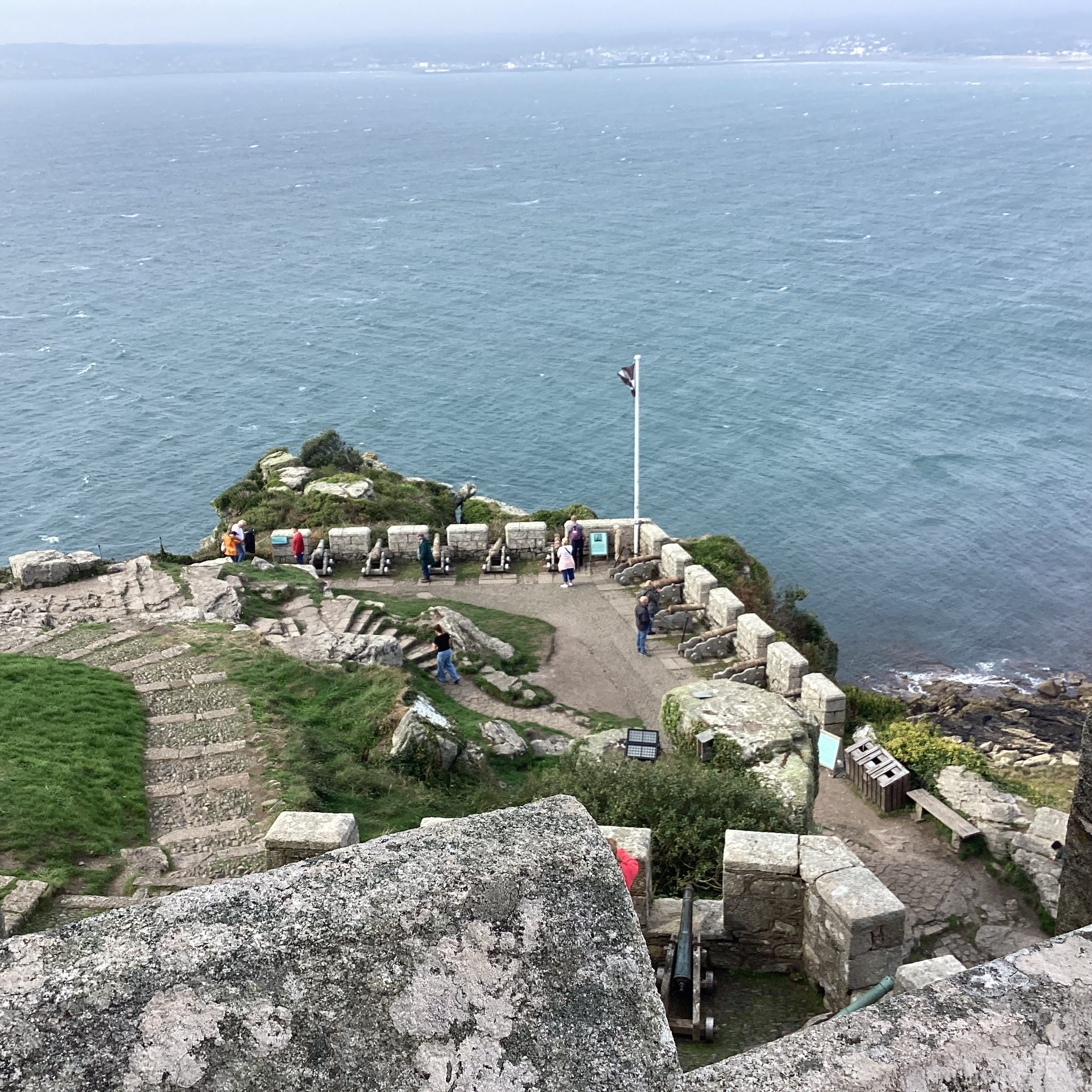
Speaking of strength, here’s another side of St. Michael’s Mount, the military side: Note the cannons set up to defend the fort and the town. That’s Penzance off in the distance. And that’s the flag of Cornwall, all black with a white cross.
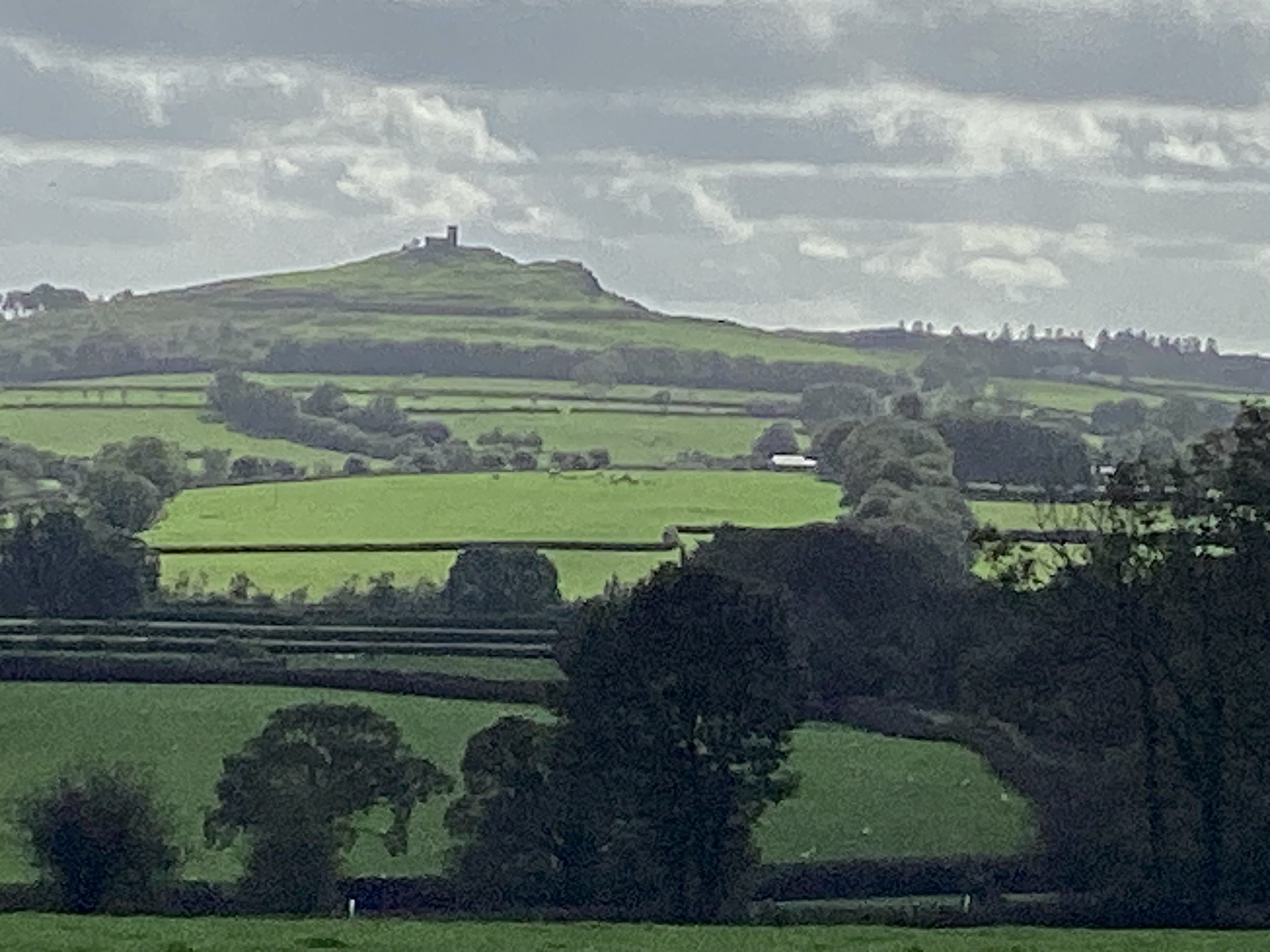
St. Michael’s Mount was part of England’s coastal surveillance effort during the defeat of the Spanish Armada in 1588. St. Michael’s de Rupe on top of Bren Tor was also part of that. Here’s a photo of that St. Michael’s, which is up the coast in Devon, near Plymouth. I’ll have more about my walk to St. Michael’s on Bren Tor in a future post.
The Spanish launched their all-out naval assault during the reign of Queen Elizabeth I, when there was a lot of bloodshed between England’s Catholics and Protestants. One of the goals of the Armada was to restore the Catholic religion to England. The pope at the time, Pope Sixtus V, gave moral and financial support to the Spanish. He granted Spanish sailors in the Armada indulgences. It wasn’t just Spaniards. English Catholics were in on it, too. Several were caught helping the Spanish and were either killed or banished.
Ultimately, the Armada failed because the English were better naval tacticians, the Spanish were under the command of a weak, ineffective admiral, and rough seas destroyed dozens of Spanish ships along the western shores of Ireland and Scotland.
The upshot was that the English Protestants saw the foul weather that destroyed the Spanish Catholics as a sign that God had blessed their separation from the Roman Catholic Church.
Thirty years after the defeat of the Armada, the Mayflower Pilgrims sailed out of Plymouth, headed for Virginia, but landing instead in Massachusetts. And it was at that point that the English turned their attention to the New World and the huge sums money to be made shipping captive Africans to the sugar plantations managed by their countrymen in the Caribbean and eventually the tobacco and cotton plantations in the colonies managed by their countrymen in the American South.
One such colony, Maryland, was settled by Catholics for Catholics. St. Mary’s City was its first capital. The colony of Maryland was chartered by the Calvert brothers. Cecil, the Second Lord Baltimore, held the proprietary grant from King Charles I. His brother Leonard was Maryland’s first governor. And it was in St. Mary’s City that the colonial government passed the Maryland Toleration Act of 1649, which was the start of religious freedom in America.
So, a hundred years after the Prayerbook Rebellion massacre in England, God opened a window for Catholics in Maryland.
Not long after that, In 1777, one of Maryland’s prettiest towns, Saint Michaels, was settled along the eastern bank of the Chesapeake Bay. And it’s still there, as prosperous as ever.
All for now. I’m traveling for the next few days. I’ll be back at the political beat next week. Thanks to all my supporters and paid subscribers.
What an incredible journey for you! I have enjoyed reading about your pilgrimage...a reminder of the importance of our faith...and God and St. Michael watching over us.
Thanks again Mike for making such an admirable effort for St Michael, and reminding us of his powerful presence in the soul of our Faith!
Clearly his role in defending the true revelation of God is at the fore again in today's world: the everpresent digital mirror we have created with AI only reflects back to us the confusion from which St Michael's has always defended God's people, and always will.